

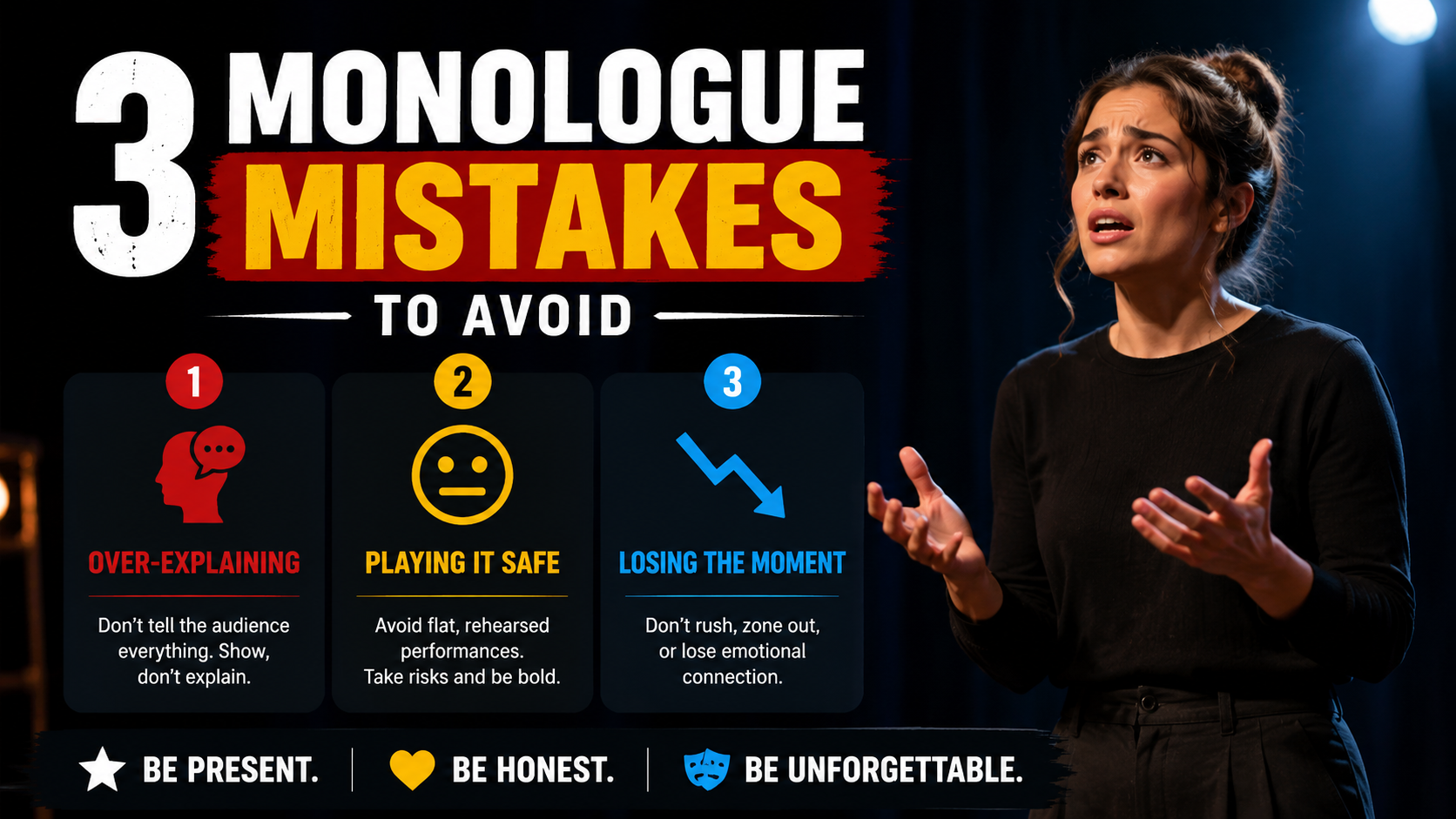
What 3 monologue mistakes to avoid when performing a monologue? Performing a monologue, focused, emotional, is an important skill for actors in theater, film, and auditions. A strong monologue helps actors show talent, confidence, and character. But there are also things an actor should avoid to make sure the performance stays clear and professional. Below are the top three things to avoid when performing a monologue, along with extra tips used by acting teachers and casting directors. We
Mistake 1: Avoid Shock Monologues
One of the most important things to avoid is choosing a monologue that depends only on shock value. Shock monologues, extreme, distracting, often include loud yelling, heavy violence, or offensive topics. While they may feel dramatic, they usually make casting directors uncomfortable and don’t show real acting skill. Instead, actors should choose monologues with real emotion and natural storytelling.
Mistake 2: Don’t Use Props
Many beginners think props will make their performance better, but they actually do the opposite. Props, unnecessary, confusing, can distract from the actor’s face, voice, and emotion. Auditions are about you, not the object you are holding. Casting directors want to see your acting ability, not how you use a phone, bag, or random item. Keeping your hands free also helps your body language look natural and relaxed.

Mistake 3: Avoid Miming
Another mistake to avoid is miming actions like opening a door, eating food, or pretending to drive a car. Miming, awkward, unrealistic, pulls attention away from your character’s emotions. Instead of pretending to hold objects, focus on clear expression and strong storytelling. Casting directors prefer monologues that feel clean and simple, not filled with unnecessary movement.
Mistake 4: Avoid Using an Accent or Dialect
Actors should not use accents unless they can perform them perfectly. Bad accents, messy, distracting, make the monologue sound unnatural. It’s better to use your natural voice unless the audition specifically asks for an accent.
Mistake 5: Don’t Talk to the Air
Some actors look above the audience or stare at the ceiling. This makes the performance feel disconnected. Your focus, steady, meaningful, should be just slightly above the casting director’s head or toward an imaginary person at eye level. This helps your monologue feel real.
Mistake 6: Don’t Rush Your Delivery
A common mistake is speaking too fast. Rushing, nervous, confusing, makes it hard for the director to follow your emotions. Take your time, breathe, and allow pauses. Good pacing shows confidence and skill. A study from the American College of Sports Medicine showed that dehydration resulting in a loss of as little as 2% of body mass can be associated with a decline in physical performance. This proves that nerves and stress affect performance, so staying calm and hydrated helps actors deliver clear monologues.
Mistake 7: Avoid Picking Popular Monologues
Popular monologues, overused, predictable, make it harder for actors to stand out. Casting directors may hear the same monologue many times. Choosing a unique piece shows creativity and helps your performance feel fresh and original.
AI disclaimer: The image of this blog has been generated by: https://notegpt.io/ai-image-generator
If you have any question https://allthequestions.com/ would love to answer!

1 Comment
Pingback: What are the 3 types of monologue? - All The Questions